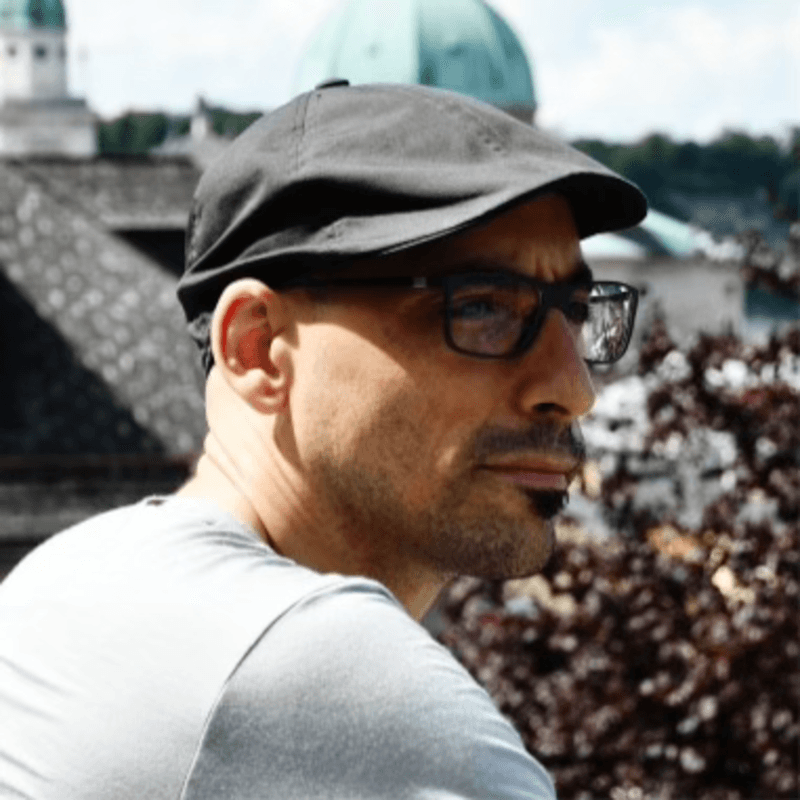
Portrait of Morten Kolle, co-founder and CEO of Pixop

Learning Focus the Hard Way
Morten Kolle’s entrepreneurial instinct emerged early. Raised in a family of entrepreneurs, he began his professional life working alongside his father in real estate, handling sales documentation and financial presentations long before software tools were commonplace.
When his father died unexpectedly while Morten Kolle was in his early twenties, responsibility arrived abruptly. What followed was not a straight ascent, but a period of experimentation, uncertainty, and self-education.
In the mid-1990s, Morten Kolle encountered the internet for the first time. Like many early adopters, he did not fully understand it at first. What mattered was the signal: something fundamentally new was forming.
That curiosity led him to found Certus A/S in 1997, initially combining traditional website development with early browser-based games.
The company grew quickly, but, by Morten Kolle’s own assessment, it did so in the wrong way.
“We split ourselves across two very different directions,” he says today. “For a small startup, that dilution of focus is deadly.”
The dot-com crash forced the lesson home. Certus did not survive in its original form, but Morten Kolle chose to rebuild it around what was genuinely differentiated: casual multiplayer games running on a proprietary platform called Symfoni.
That second iteration worked. In 2006, Certus A/S was acquired by Betware, marking Morten Kolle’s first and only exit to date.
The experience left a durable imprint.
Focus, he learned, is not a strategic preference. It is a survival skill.
From Entrepreneur to Operator
After the acquisition, Morten Kolle stayed on to run the Danish operation for several years. It was his first sustained period inside a larger organisation, and it changed his perspective. For the first time, risk receded. Salaries arrived predictably. The adrenaline faded.
That contrast became sharper when Morten Kolle later joined Telenor, where he was asked to take over a struggling Mobile Virtual Network Operator (MVNO) platform the company had recently acquired. The situation was fragile: morale was low, accountability unclear, and the investment itself was at risk.
Morten Kolle’s response was not technical but organisational. He led a cultural reset, making difficult personnel decisions and rebuilding the team around trust, transparency, and clear ownership.
With a stabilised organisation in place, the platform was ultimately merged into another Telenor subsidiary, CBB, securing the original investment and embedding the technology into Telenor’s broader commercial structure.
The turnaround succeeded. It also clarified something for Morten Kolle: comfort was not where he did his best thinking.
He was most energised when something still had to be built.
Why Pixop Was Worth the Risk
Morten Kolle met Jon Frydensbjerg through earlier ventures. When Frydensbjerg approached him in 2017 with early ideas around machine-learning-based video enhancement, Morten Kolle did not see a business plan.
He saw a frontier.
The initial focus was file-based enhancement: restoring and improving existing video assets. The ambition was high, but the path to scale was unclear.
For several years, Pixop explored broadly, building filters, improving quality, and working with early broadcast contacts. The technology worked. The business model, less so.
The question that kept coming back from the market was simple:
Can this run live?
At first, the honest answer was no.
Compute constraints made real-time processing impractical at broadcast quality. That changed gradually, and then suddenly.
In 2022, discussions with Intel helped clarify the limits of CPU-based approaches. To achieve consistent, high-quality results in real time, Pixop would need to commit fully to GPU-based processing and rethink enhancement as a full pipeline rather than a single filter.
The decisive shift came in 2023. Signals from customers, partners and Pixop’s investor increasingly pointed in the same direction: live enhancement was where Pixop could be genuinely differentiated, precisely because few others could execute it properly.
The company committed.
“External clarity matters,” Morten Kolle says. “Sometimes you need someone outside the company to say what you already sense but haven’t fully accepted.”
“Morten is not the kind of CEO who chases momentum for its own sake,” says Jon Frydensbjerg, Pixop’s co-founder and CTO.
“When we commit to a direction, it’s because we’ve tested it, challenged it, and decided we can stand behind it for years. That discipline is what kept Pixop alive long enough to get live right.”
Staying Alive Long Enough
The pivot was not painless.
During the COVID period, Pixop cut costs aggressively, reduced the team, and operated for a time from Morten Kolle’s basement. Salaries were deferred. Progress slowed. Stress accumulated.
What kept the company intact was not blind optimism, but discipline. Morten Kolle resisted the temptation to subsidise the business indefinitely with personal assets. Pixop, he believed, had to earn its survival.
That attitude also reflects something more personal in Morten Kolle’s approach to entrepreneurship.
“I’ve never had much need for a safety net,” he says. “When I believe in something, I tend to go all in and I don’t give up easily. But my wife has stood by me through all the uncertainty that comes with that. You don’t make these journeys alone.”
That persistence has now begun to translate into something much more tangible.
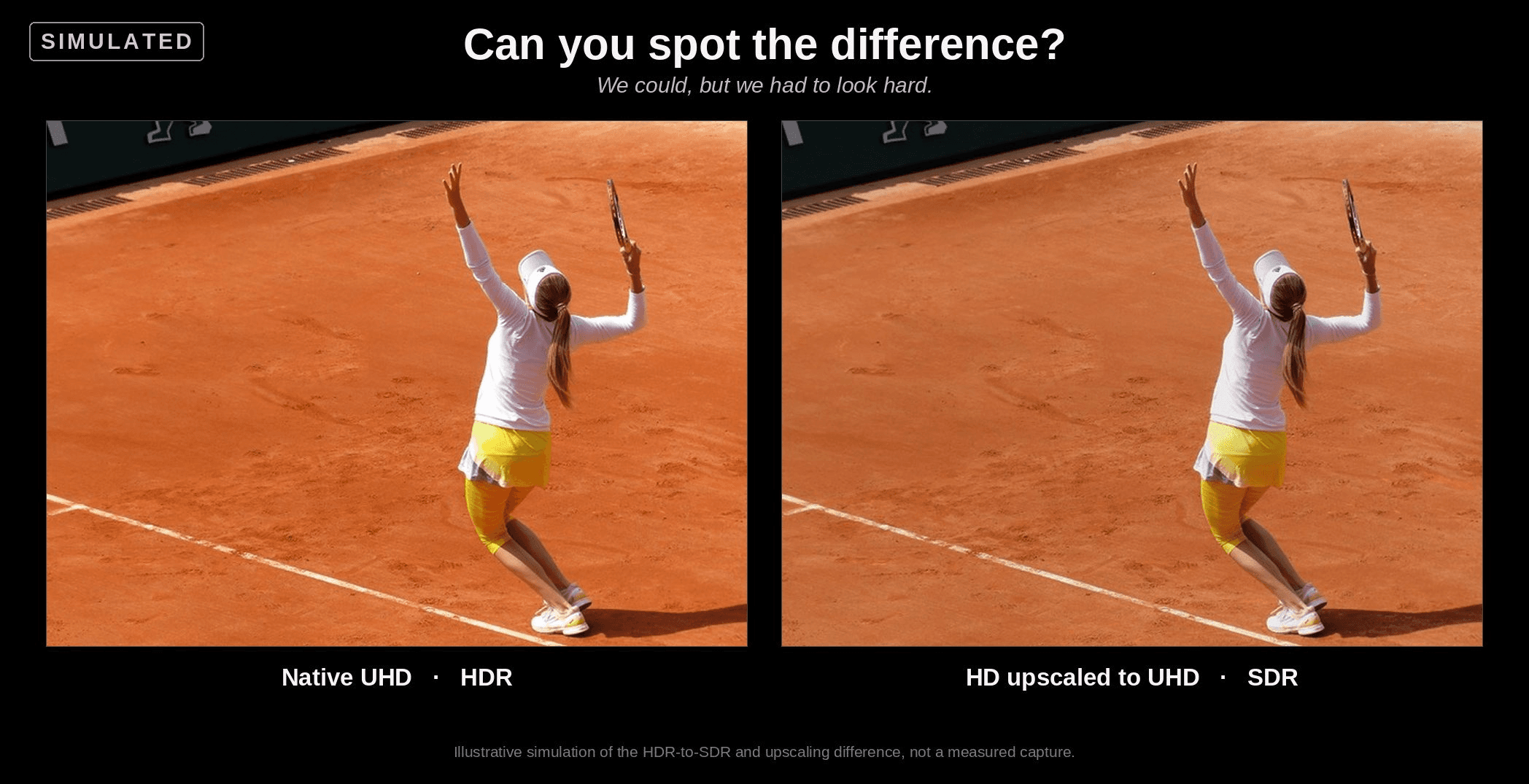
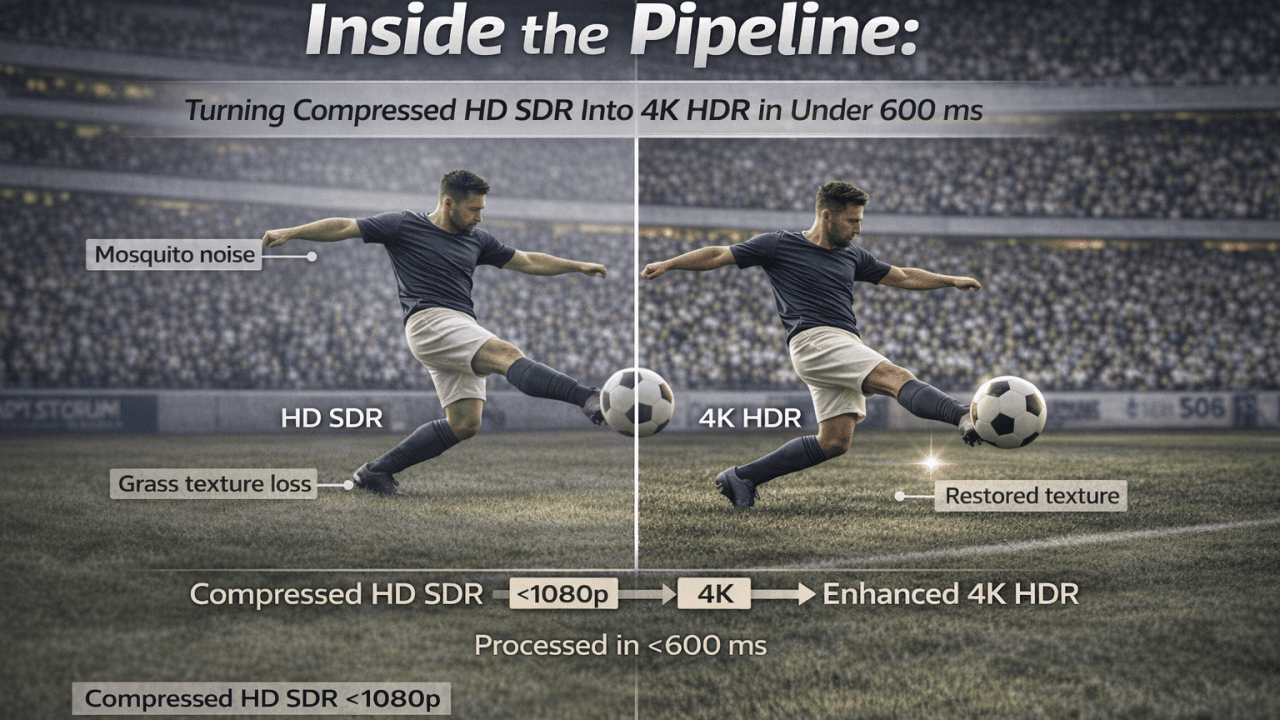
During the 2026 FIFA World Cup, Pixop’s real-time technology was deployed by Chilevisión and Claro VTR in Chile, enabling Chilevisión’s HD signal to be enhanced and delivered as a 4K experience to Claro VTR subscribers.
For Morten Kolle, the significance went beyond the individual deployment.
Live sport leaves very little room for experimentation once the signal is on air. Quality has to be consistent, latency predictable, and the technology has to perform continuously under real production conditions.
The successful World Cup deployment provided an important proof point for a technology that, only a few years earlier, had still been answering the question: Can this run live?
Pixop is now building on that experience with further live 4K HDR trials in sports. Those trials are testing how real-time enhancement can improve the quality and value of existing production workflows, and have delivered strong early results.
The conversation is changing as a result.
What began as a question of whether sophisticated AI-based enhancement could be performed live is increasingly becoming a discussion about where it should sit in the broadcast chain and how it can be deployed operationally at scale.
From Technology to Infrastructure
For Pixop, that transition from technology to infrastructure is now the central challenge.
The focus is on turning successful deployments and live trials into repeatable, long-term production use.
At the same time, Pixop has made its technology available within established broadcast ecosystems such as TVU MediaMesh. Pixop Prime is also available through AWS Marketplace, giving customers the option to procure the technology through an established cloud marketplace.
The World Cup deployment in Chile, together with ongoing 4K HDR trials in live sports, has therefore moved the conversation with broadcasters beyond whether real-time enhancement is technically possible.
The question is increasingly how and where it should become part of their workflows.
That shift is also changing the company itself. As market interest turns into deployment demand, Pixop is preparing for its next stage of growth, expanding both the organisation and its investment base.
A Builder of Trust
Morten Kolle is clear-eyed about his own strengths. He does not present himself as a fundraising tactician or a visionary product savant.
What he emphasises instead is trust.
“I’m good at building teams people want to stay in,” he says. “And at building partnerships that last.”
That matters as Pixop moves into a phase where broadcasters, rights holders and technology partners are being asked to trust the company with something increasingly critical: live video.
An impressive demonstration is not enough.
The technology has to work when the signal is live. It has to handle imperfect sources, operational constraints and the pressure that comes with high-value content — particularly live sport.
For Morten Kolle, success is not defined by an imminent exit.
It is defined by scale, reliability, and adoption. If Pixop becomes part of the infrastructure that broadcasters trust to run continuously, he will consider the journey meaningful.
“I’m a zero-to-one person,” he says. “But zero-to-one only matters if what you build can actually stand.”